Equipment malfunction may cause disruptions in the processes, lead to expensive repairs, and affect overall production. Companies that depend on steady performance value the need to diagnose potential problems in their equipment before it becomes critical. Thermography proves to be an effective way of diagnostics that allows noticing hidden temperature anomalies without stopping the production process. Using thermography will help to solve problems in advance and will result in increased equipment reliability and overall efficiency. Below is a set of information about thermography as a downtime reduction tool.
Detecting Early Signs of Equipment Failure
One of the biggest benefits of thermal imaging is its capability of detecting developing faults long before any visible damage takes place. Devices like electrical panels, motors, transformers, bearings, and mechanical devices are supposed to emit some amount of heat when working. Yet abnormal temperature rises point out loose electrical connections, too much friction, overloaded circuits, degradation of insulation, or mechanical failures.
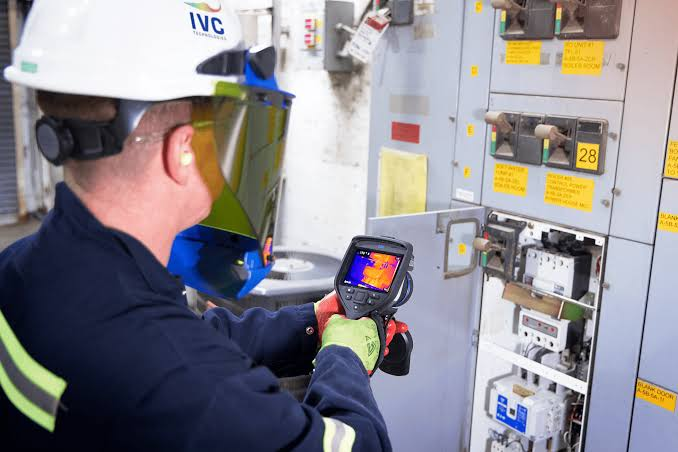
Performing regular thermal scans gives an opportunity for maintenance crews to detect all these problems while the equipment operates. No need to wait until alarms go off or the system stops suddenly, as maintenance crews will have enough data in their hands to take prompt action. Early diagnosis ensures fewer emergencies, less downtime, and extended life of vital equipment.
See also: Ways NVIDIA Edge AI is Revolutionizing the Tech Industry
Supporting Predictive Maintenance Programs
The success of predictive maintenance is determined by accurate monitoring of the equipment, and thermal imaging offers quality information that enhances decision-making processes. Instead of changing functioning parts and acting in response to problems that arise, maintenance processes can be performed based on the measurable thermal state of equipment.
Periodic inspections give an opportunity to monitor temperatures of critical equipment. With increasing experience, which is obtained from inspections performed regularly, maintenance experts can easily notice temperature variations indicating emerging problems.
Integration of thermal imaging in predictive maintenance leads to a reduction of unnecessary changes of parts, decreased expenses, and enhanced performance of the maintenance staff. Maintenance experts have enough time for performing maintenance operations because of a decrease in emergencies.
Visualizing and Verifying Thermal Performance
Thermal imaging enables the depiction of invisible heat patterns through visual representations for easier inspection of equipment. The color-coded thermal imaging aids in the detection of temperature variations on electrical equipment, machines used in manufacturing, HVAC systems, pipelines, and building structures. It becomes easy to communicate findings due to the visual representation of findings.
Accurate thermal documentation also helps verify whether completed repairs have successfully resolved overheating concerns. Comparing images captured before and after maintenance confirms performance improvements while providing evidence for quality assurance processes and compliance documentation. Organizations seeking dependable inspection capabilities often invest in the best infrared inspection solutions to obtain consistent image quality and precise temperature measurement. This dependable reporting supports informed maintenance decisions.
Improving Workplace Safety and Operational Reliability
The importance of thermal imaging for occupational safety lies in its ability to detect unsafe conditions prior to any failure. Overheated wires, overloaded circuits, damaged insulation, and faulty equipment tend to emit an increased amount of heat before showing any visible signs of danger. Early detection of such issues prevents fires and equipment damage, along with safety problems for the employees.
Due to the fact that inspections are conducted in a non-contact manner, it is possible to conduct a check of the equipment that is still in operation at a safe distance from it. It provides a technician with an opportunity to work in a safe environment and avoids unnecessary downtime.
Strengthening Long-Term Asset Management
Thermal imaging ensures proper asset management by giving useful information about the condition of the equipment through its operational life cycle. It eliminates the dependency of the equipment’s replacement process on the basis of its age. Objective information is obtained about the equipment that shows how it is really performing.
The inspection report helps in the creation of maintenance history for budgeting and for taking replacement decisions based on the maintenance performance of the equipment. Managers are able to determine the problems with thermal efficiency of the equipment and assess the effectiveness of the maintenance measures, thus identifying whether it is beneficial to continue maintaining the equipment or replace it.
Thermal imaging has now become an integral part of maintenance practices today. This is because, through the detection of any unusual heat signatures prior to any malfunctioning of the machinery, companies are able to avoid any unnecessary interruptions to their operations. In addition to that, thermal imaging helps to keep all business processes flowing smoothly.