When we think about the milestones of early childhood, we often prioritize walking, talking, and social interaction. However, for families living in environments where water is a constant presence—whether it be backyard pools, vacation resorts, or coastal trips—aquatic literacy is just as fundamental. For many parents, the search for structured swimming programs begins with a simple desire: to keep their children safe. But as we dive deeper into the science of early swimming, it becomes clear that getting infants into the water does much more than just build safety skills; it lays a foundation for physical and cognitive growth that lasts a lifetime.
The Olympian Vision: A Foundation of Quality
The philosophy behind specialized infant swimming isn’t just about splashing around; it’s about a professional standard of instruction. The Piranha Swim Team, for instance, was born out of a specific need identified by its co-founder, Kareem Ennab. As a former Olympian who represented Jordan on the world stage, Ennab saw firsthand the global disparity in swim education. He realized that while many children had access to water, few had access to a high-quality curriculum that prioritized the “right way” to learn.
In March 2018, this vision came to life. What started with 100 students has grown into a massive community, teaching over 24,000 swimmers. By 2021, the team managed to build their own specialized pool facility, ensuring that the environment is perfectly tuned for young learners. This history matters because, for an infant, the quality of the instructor and the facility is the difference between a traumatic experience and a transformative one.
Why Start at Six Months?
The window between 6 months and 2 years is a golden period for water acclimation. At this age, infants have not yet developed the deep-seated fears that older children sometimes struggle with. Instead, they possess natural reflexes that make them surprisingly adaptable to the water.
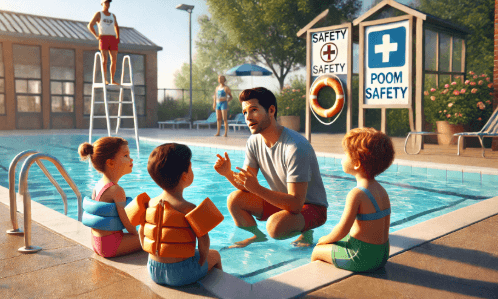
Early aquatic exposure through a specialized infant water safety class focuses on building “water competence.” This isn’t about teaching an infant the butterfly stroke; it’s about survival skills. These include:
- Breath Control: Learning how to close their mouths and hold their breath when submerged.
- Buoyancy: Understanding how their bodies feel in the water and how to remain calm.
- Self-Rescue: Developing the muscle memory to turn toward the edge of a pool or float on their backs.
At Piranha, these sessions are kept short and focused. Infant private classes last 20 minutes (100 JD for 10 classes), which is the perfect duration for a baby’s attention span and physical stamina. Alternatively, parent-and-child classes last 30 minutes (150 JD for 10 classes), allowing for a bonding experience that builds trust between the child, the parent, and the water.
Cognitive and Physical Benefits Beyond Safety
While safety is the primary motivator, the secondary benefits of infant swimming are profound. Water provides a unique environment where babies can move their limbs freely without the constraints of gravity. This resistance training helps develop core strength and coordination much earlier than traditional “tummy time” might.
Furthermore, bilateral movement—using both sides of the body to move through the water—has been shown to build neurons across the brain’s corpus callosum. This improves communication between the two hemispheres of the brain, which can lead to better spatial awareness and even enhanced reading and math skills later in life. When a baby kicks and reaches in the pool, they aren’t just playing; they are building the neural pathways for future academic and physical success.
A Pathway for Every Stage of Growth
The beauty of a structured aquatic program is that it grows with the child. Once a child moves past the infant stage, they enter the “Learn-to-Swim” track (ages 2–12). Here, the focus shifts to independence. With group classes capped at five kids per coach (85 JD for 10 classes), the transition from survival skills to stroke development is seamless.
For those who show a natural affinity for the sport, the journey continues into the Piranha Squad or even the Competitive Swim Team. This long-term vision—from a 6-month-old baby in a safety class to a 14-year-old athlete training for national competitions—is what makes a curriculum-based approach so essential. It ensures that the child is never “starting over” but rather building upon a solid foundation.
See also: The Importance of Reliable Home Systems for Everyday Quality of Life
The Importance of Professional Facilities
We cannot overlook the environment in which these lessons take place. Infants are particularly sensitive to water temperature and hygiene. A specialized, owned facility allows for strict control over these variables. A pool designed for training, rather than just recreation, provides the shallow areas and stable temperatures necessary to keep a baby comfortable. This comfort is key; if a child feels physically safe and warm, they are more likely to engage with the lesson and retain what they’ve learned.
In the End
Investing in early swimming lessons is one of the most proactive steps a parent can take. It is a gift of confidence and a vital layer of protection in a world full of water. By choosing a program led by experts who understand the athletic path from an Olympian perspective, parents ensure that their children aren’t just learning to swim—they are learning to excel. Whether it’s through seasonal camps during school breaks or year-round training, the goal remains the same: to create a generation of safe, skilled, and confident swimmers who are as comfortable in the water as they are on land.