Whether you are in sales, IT, procurement, or the legal field, you probably already know that contracts are the lifeblood of your organization. How you manage them, how much time you spend creating and following up on them, and how you utilize them will ultimately determine the success of your company. In this day and age, there is a better way to handle the lifecycle of your contracts than leaving it all to your employees. When you utilize an AI-powered management tool, you improve visibility, compliance, and efficiency.
Here is more information on what contract lifecycle management is and how a contract management tool can help take your organization to the next level.
What Is Lifecycle Management of a Contract?
Contract lifecycle management is just what it sounds like: The process of managing a contract from start to finish. This involves managing agreement with customers, clients, vendors, partners, and employees through each stage of the contract. It involves creating the contract, managing it, sharing the relevant information from the contract with others, and archiving the information once the contract has come to an end.
Stages of the Contract Lifecycle
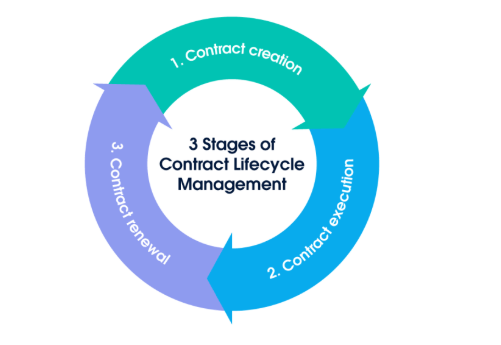
There are several different stages of a contract lifecycle. Contract lifecycle management helps improve visibility, compliance, and efficiency through all of them. Stages include:
- Creation of the contract. This can be done from scratch or, with a good contract management tool, from a template to free up time. This stage is also referred to as contract generation or contract drafting.
- Negotiation of the contract. This is the stage where all parties involved in the contract either sign it or negotiate the terms of the contract. If negotiation occurs, all involved need to be able to track changes, feedback, and versions of the contract.
- Approval of the contract. Once all changes have been made and tracked, the companies and legal counsel review and approve it.
- Execution of the contract. All parties must sign the contract–preferably digitally–so the terms of the contracts can then be performed.
- Storage of the contract. This should be done in a digital format and be available for all parties to consult whenever needed.
- Management and analytics. The final stage of the contract lifecycle management is administering it, creating reports, and analyzing it for optimization.
Why is Management of a Contract Important?
The proper and efficient management of contracts throughout their lifecycles is crucial to the success of your business. Here’s why:
- It helps centralize information and data. This makes it easier for all who need access to the information find it and ensure they are all getting the most up-to-date and accurate information.
- It helps create a streamlined workflow that is shared by all and allows your team to move through the stages of the contract more quickly. When their tasks are streamlined or automated, your team can spend their time on the parts of your business that matter most.
- It creates trust and transparency throughout your organization as everyone can see the information included throughout the contract cycle.
- It decreases risk exposure as it creates an audit trail throughout the contract lifestyle management.
Using the Right Tool for Contract Lifecycle Management
When you use the right AI-powered tool, your contract lifecycle management can be streamlined, optimized, and made visible for all involved. This frees up your team’s time, reduces the chances of errors, and helps evolve your company to the next level.